
Choosing the Right Standby Generator
for Your Home
What Size Generator Do You Actually Need?
How Our Team Size Generators Correctly
We conduct a thorough walk through of your home and carefully add up the power draw of everything essential. For instance, your refrigerator pulls 700 watts. Additionally, your furnace blower needs another 875 watts. Meanwhile, that CPAP machine requires an additional 300 watts.
Through 20 years of generator installations, we've learned that most homes need between 16kW and 24kW. However, your house isn't like most houses—which is precisely why we calculate your specific needs before making any recommendations.
Understanding Your Home's Power Requirements
The first step in selecting the right standby generator involves determining your power requirements. Our team carefully considers essential appliances and systems that need to remain operational during an outage:
- Refrigerators and freezers
- Heating and cooling systems
- Medical equipment
- Sump pumps, pool equipment, water pumps
- Garage and gate openers
- Security systems
- Lights
Subsequently, we calculate the total power consumption of your essential appliances to establish the minimum power requirements your generator should meet.
Understanding Your Home's Power Requirements
Next, you must consider the fuel type that best suits your needs. Cummins emergency generators run on natural gas, propane, or diesel. Each fuel type offers various advantages, including differences in availability, cost, and convenience.
For most suburban homes, a natural gas meter already provides an unlimited fuel supply to the generator. Additionally, the same generator accepts propane (LP) for rural settings.
Diesel generators also provide important advantages. Therefore, we carefully assess your fuel availability, budget, and personal preferences to determine which option suits your home best.
Physical Generator Size and Installation Requirements
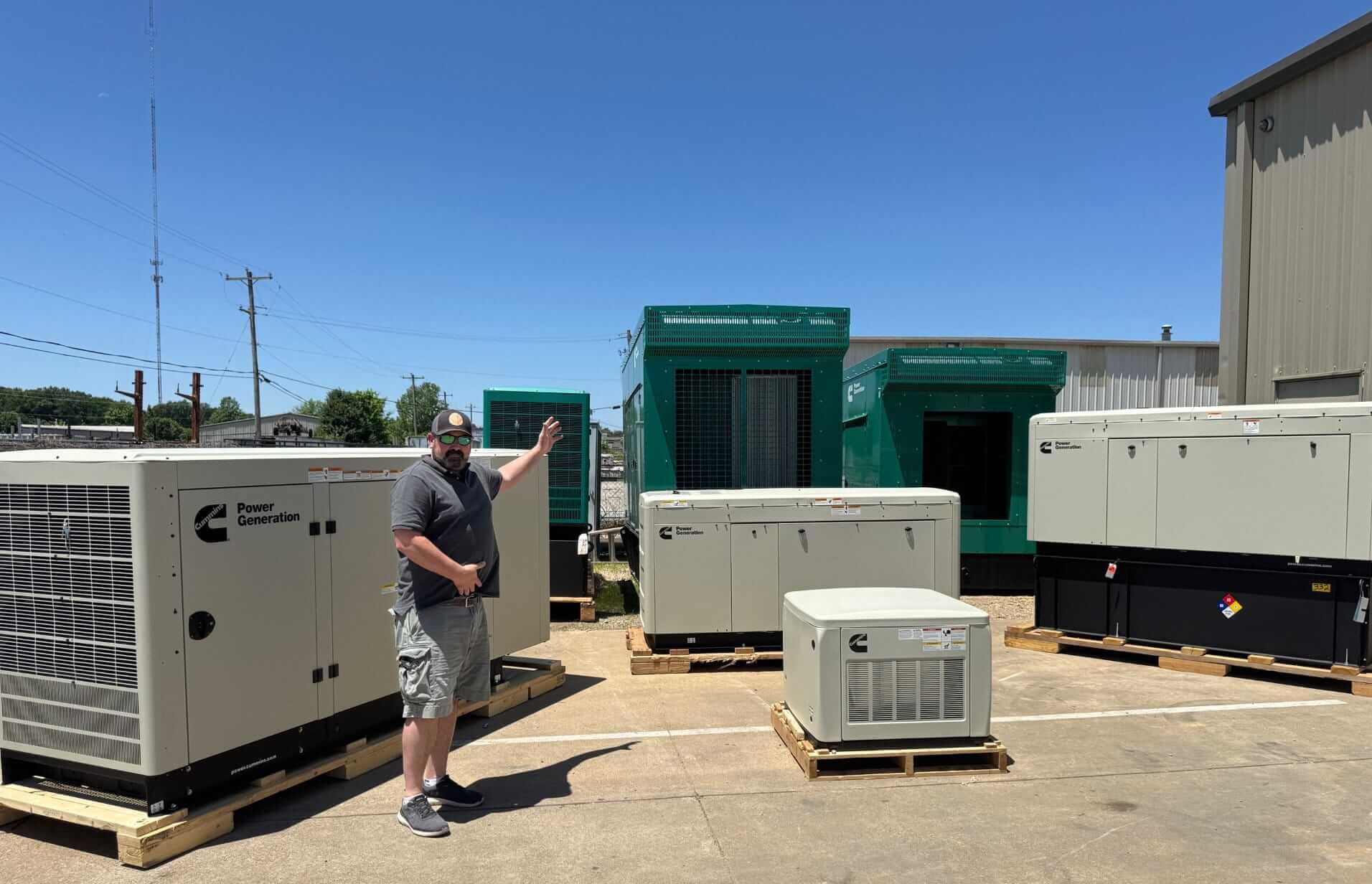
The physical size of a generator and its corresponding installation requirements also represent crucial considerations. Because standby generators come in different sizes, you must choose one that fits your available space and conforms to local codes while also meeting your standby power needs and requirements.
Why We Choose Cummins
We've installed generators from all major brands over 20 years. In 2017, we switched to Cummins exclusively.
Here's Why
- Quietest in the industry
- Most reliable
- Fewest breakdowns
- 100+ years of innovation
- Best warranty (up to 10 years available)
Warranty Service and Routine Maintenance

Lastly, don't forget the warranty and maintenance options the manufacturer and installing dealer offer. Cummins provides one of the best warranties in the industry, with fewer exclusions than other manufacturers impose. Moreover, they offer extended warranty options that provide coverage for up to 10 years.
Maintenance Matters
- 20+ years experience in generator service
- After-hours emergency number
- Available Friday night at 9 PM if needed
Ultimately, our goal ensures we offer top-level service to every customer. Read more about Generator Routine Service offered throughout the Mid-South.
Finally, our article on Generator Repair Services is worth a quick read because, surprisingly, it identifies the top two reasons for generator fail-to-start issues.
Knowledge Is Power
By carefully considering your power requirements, fuel type, size, reliability, and maintenance options, you can confidently choose the right standby generator system for your home. Through this investment, you receive uninterrupted power, ensuring your home remains safe, comfortable, and functional even during the most challenging outages.
The end result? You and your family receive peace of mind!
Learn more about standby power: